The Best HR & People Analytics Articles of February 2020
February’s collection of articles proves to be one of David’s strongest collections since he began curating articles almost five years ago, which highlights…
As I wrote in a recent edition of the Digital HR Leaders newsletter, creating an Ethics Code of Conduct is one of the leading practices in People Analytics we advocate at Insight222 to help organisations establish and grow a successful people analytics function.
We saw a perfect example in the last few weeks of why this is so important. Several media outlets covered a story about Barclays Bank pulling a pilot it had implemented, which according to the BBC “tracked the time employees spent at their desks and sent warnings to those spending too long on breaks”.
Whatever the real story behind the headlines, it would seem that a combination of a lack of transparency to employees and poor communication has led to a PR disaster for the bank and workforce mistrust.
That is why an Ethics Code of Conduct for People Analytics, which is accessible to employees, promotes a ‘fair exchange of value’ for providing data for people analytics and is widely communicated is so important. If you demonstrate openly that you handle workforce data ethically as well as according to laws and regulations, then you are likely to get more traction.
However, research we’ve undertaken at Insight222 finds that most companies are still overlooking this critical element of people analytics with only 23% of companies currently having an Ethics Code of Conduct in place for People Analytics. Developing an Ethics Charter was the first co-creation project we developed with clients when we set up the company in 2017. People data should be used for good to generate business outcomes and improve workforce experience and wellbeing.
On with this month’s collection of articles…
BUILDING A PEOPLE ANALYTICS FUNCTION
CHASE ROWBOTHAM & JAMIE OSTHEIMER - How to Start a People Analytics Organization
Pure gold as Chase and Jamie share the story of how they built a flourishing people analytics team at Genentech. The article is full of tips on a range of topics including: the key ingredients of success, the capabilities of the team (see FIG 1), the data sets that inform insights, how to operationalise sprints and prioritise the work, the technology stack required and much more. This is an invaluable resource and compulsory reading for anyone looking to build or scale their people analytics function.
The three success-levers (for people analytics) are: (1) Executive sponsorship; (2) Talent; (3) Infrastructure…in that order
[caption id="" align="alignnone" width="689"]
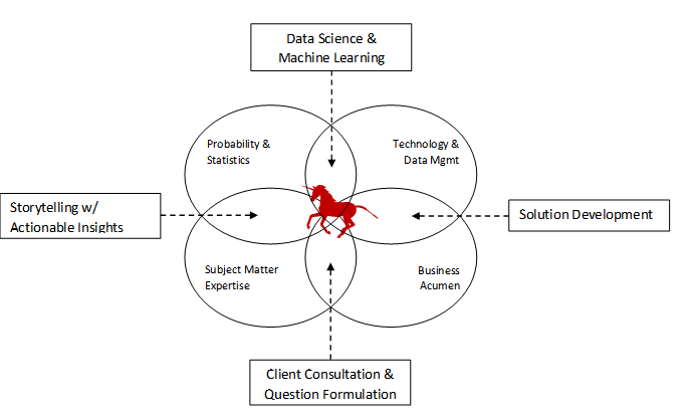
FIG 1: The capabilities required of a successful People Analytics team (Source: Chase Rowbotham, Jamie Ostheimer and Ian O’Keefe) [/caption]
SAMANTHA McLAREN, REBECCA WHITE & KATIE SITTLER - How the IMPACT Framework Can Help You Solve Your Company’s Toughest Business Problems
Another People Analytics team – this time LinkedIn’s, share the framework that they follow to structure their workflow. Learn how the team break each project down into six stages: Identify, Measure, Plan, Analyse, Communicate, Track (or IMPACT for short – see FIG 2), The framework helps in making people analytics work more manageable and ensures that the right people are asking the right questions along the way.
If you can’t define the business problem, you’ll have a much harder time trying to solve it
[caption id="" align="alignnone" width="1310"]
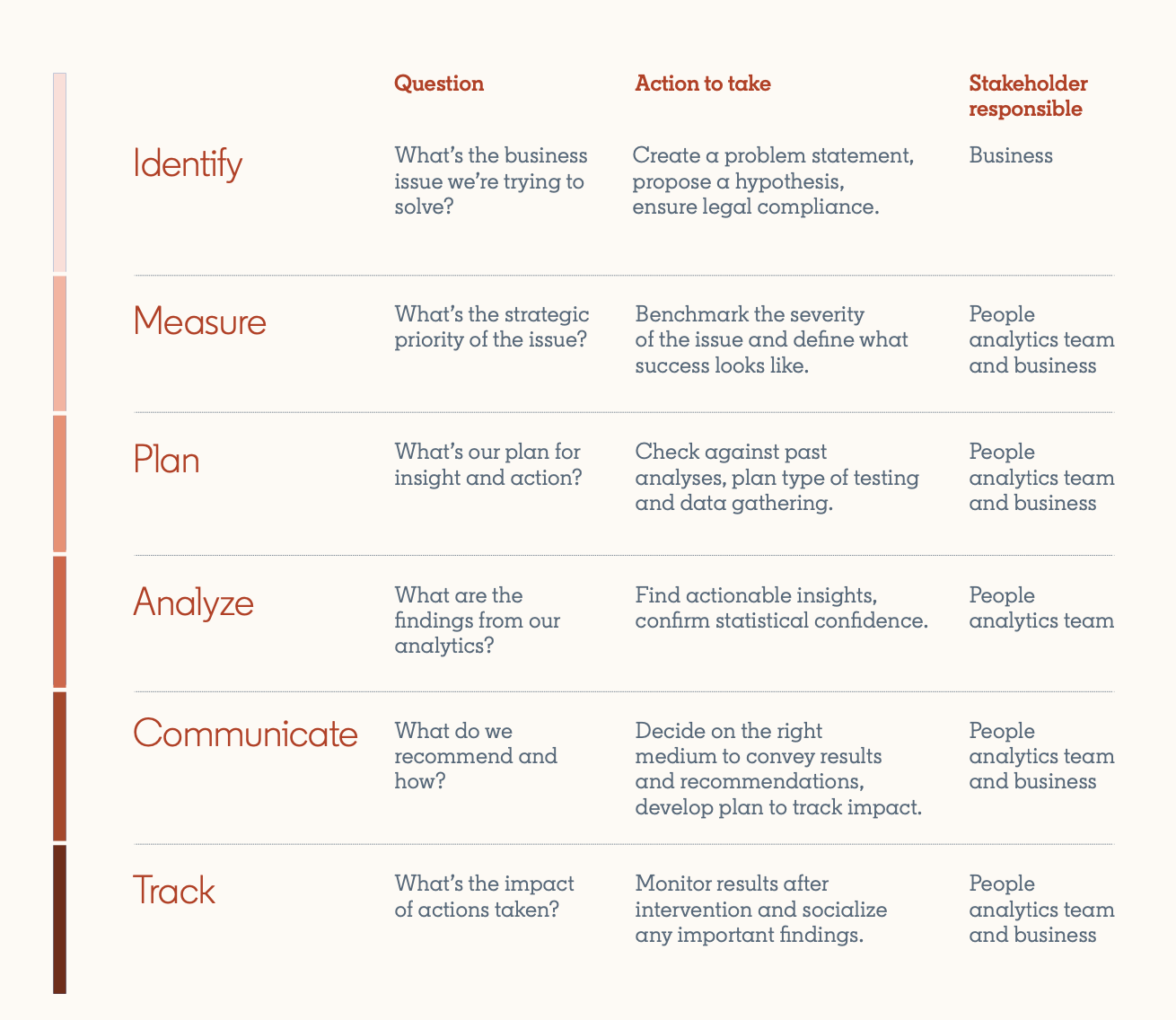
FIG 2: The IMPACT Framework for People Analytics (Source: LinkedIn) [/caption]
THE FUTURE OF HR
JP MANGALINDAN - Chief People Officer: The worst best job in tech | KATIE BURKE - How To Prepare for the “Worst Best Job in Tech”
Two terrific articles analysing the hugely challenging yet highly coveted role of the Chief People Officer (CPO). First, JP Mangalindan examines the CPO role in tech companies and concludes that “being responsible for a staff, a culture and often a whole lot more can be nerve-wracking, sometimes prompting quick exits,” citing the recent departure of Google’s Eileen McNaughton. In a direct response to Mangalindan’s article, Katie Burke, Chief People Officer at Hubspot, counters that “the ‘worst best job in tech’ is worth pursuing before outlining five considerations for anyone interested in pursuing the role. Read these two articles alongside the recent collaboration between Willis Towers Watson and SHRM on the Future Chief People Officer I featured last month, which identifies five pivots encompassing skills, mindsets and behaviours that are together reshaping the CPO role.
Traditional HR heads see people more as costs. In a more modern, growth-oriented, consumer-driven company, a Chief People Officer is thinking more about people as investments
ABBIE LUNDBERG & GEORGE WESTERMAN – The Transformer Chief Learning Officer
It’s not just the Chief People Officer role that is rapidly evolving. As this HBR article explains, the Chief Learning Officer (CLO) role is also changing – from just being responsible for training to an enhanced role in which the CLO is reshaping capabilities and organisational culture. The article examines three principal types of change, transformer CLOs are driving around learning goals, learning methods and learning departments. Features great insights from the likes of: Ewan Clark, Julie Dervin, Amelie Villeneuve, David Gledhill, Rahul Varma, Heather Whiteman and Wendi Kennedy with examples from organisations such as: UBS, GE Digital, Telstra and Standard Chartered.
Learning is no longer just an HR function. It’s a core part of your business
THE FUTURE OF WORK - RESKILLING
SAPANA AGRAWAL, AARON DE SMET, PAWEL POPLAWSKI & ANGELIKA REICH - Beyond hiring: How companies are reskilling to address talent gaps | BRYAN HANCOCK, KATE LAZAROFF-PUCK & SCOTT RUTHERFORD - Getting practical about the Future of Work
Two complementary pieces from McKinsey giving insights on how companies are attempting to close skills gaps to prepare themselves for the future of work. The first article draws on recent survey findings and reports on the multiple tactics (hiring, reskilling and changing the workforce mix are the top three) being employed and how early reskilling efforts appear to be paying off against a number of key indicators (see FIG 3). The second article places the emphasis on how organisations--and not just employees—need to equip themselves with new capabilities in order to adapt to the future of work, with a three-step process (see FIG 4) presented to enable continuous transformation of the workforce.
[caption id="" align="alignnone" width="1344"]
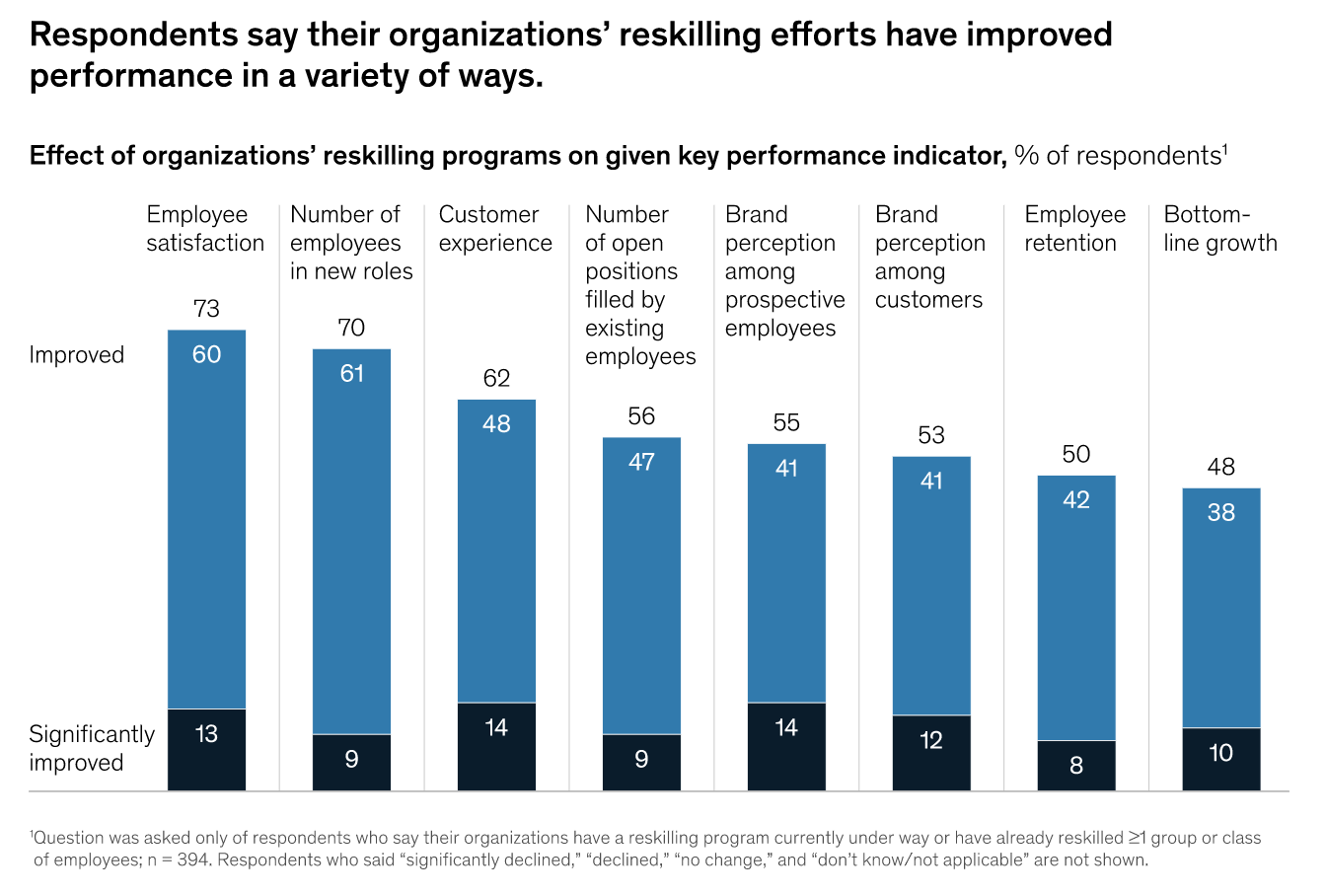
FIG 3: The effect of organisations’ reskilling efforts by given key performance indicator (Source: McKinsey) [/caption][caption id="" align="alignnone" width="1260"]
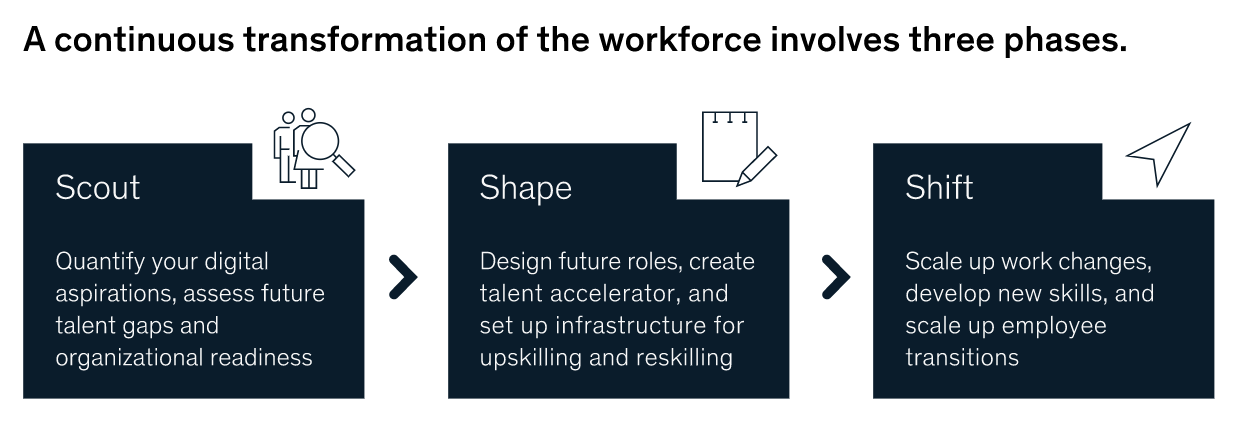
FIG 4 : Process to enable continuous transformation of the workforce (Source: McKinsey) [/caption]
STRATEGIC WORKFORCE PLANNING
DAVE ULRICH – From Workforce to Worktask Planning
As Dave Ulrich describes in this article, work is increasingly not just accomplished by full-time, part-time, or contracted workers, but also through automation and technology. This calls for a shift in thinking from a focus on workforce planning to one centred on accomplishing work tasks, which Dave outlines in a seven-step model (see FIG 5).
Removing the more routine and standard tasks to technology and automation increases employee well-being, customer service, and investor confidence
[caption id="" align="alignnone" width="1490"]
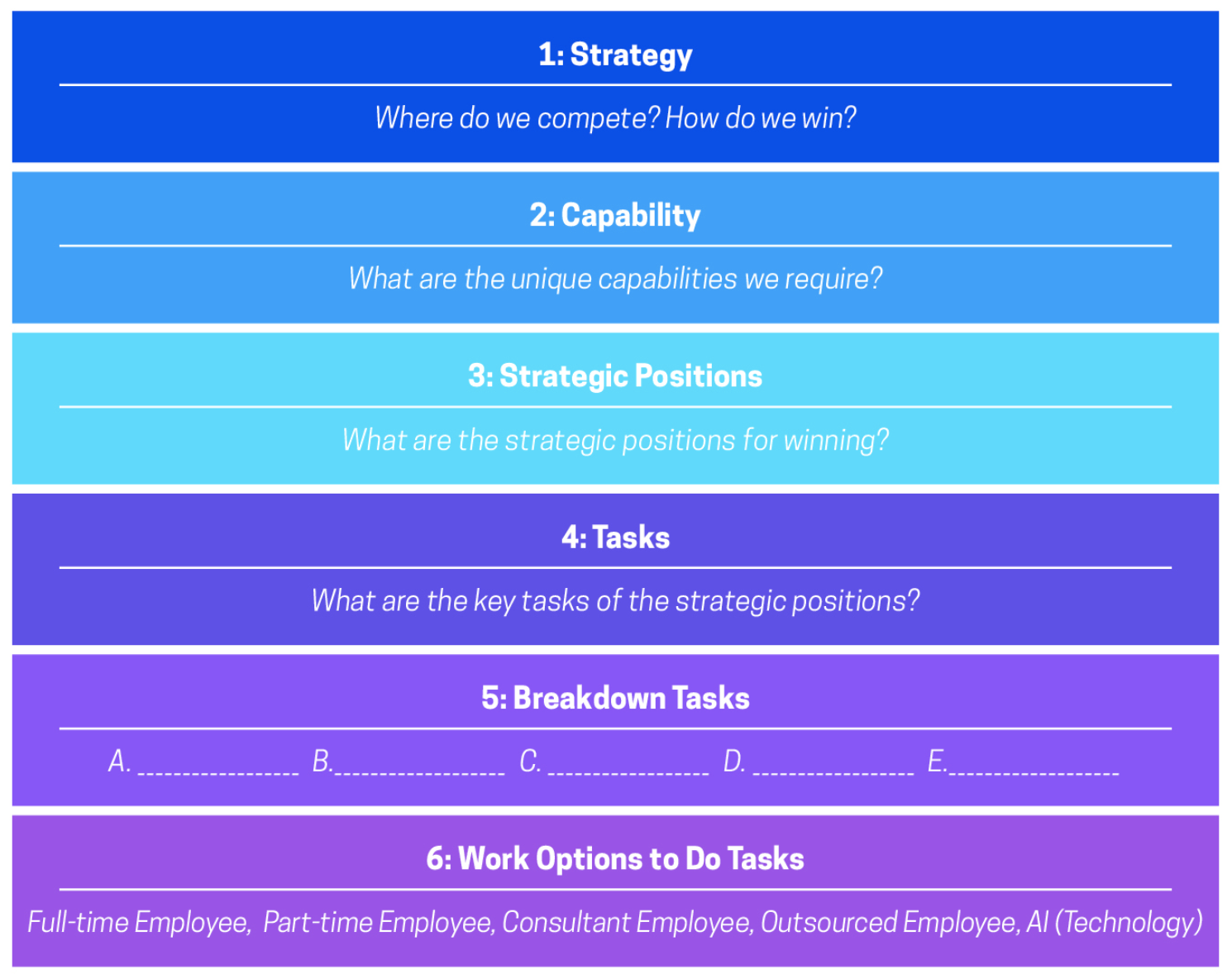
FIG 5 : Work Task Planning (Source: Dave Ulrich) [/caption]
HR TECH
JOHN SUMSER - Predictions Everywhere – 9 Trends that are Shaping AI and Intelligent Tools in HR Tech Part 1 and Part 2
The decade may only be two months old, but John Sumser has already published more gems than most of us managed in the whole of the last decade. His two-part series on nine trends shaping AI and intelligent tools in HR Tech is a prime example. As John says most of what we talk about in HR Tech as ‘AI’ isn’t really AI. Instead, he prefers to classify it as ‘intelligent tools’. Many of the trends John highlights e.g. Skills Shortages Understated, A New Type of Management and The Next Layer of Bias are all topics organisations we work with at Insight222 are grappling with.
The proliferation of intelligent tools will give every decision maker at every level a range of conflicting inputs from which a decision must be made
EMPLOYEE EXPERIENCE
PHIL MERCY & MARK HAYTON - How can “Customer Perceived Value” (CPV) Inform the Customer Experience of HR?
Net Promoter Score (NPS) has established itself as a leading measure of the customer experience and is one that has been adopted by many companies. In this revealing article Mark Hayton and Phil Mercy examine Nokia’s customer experience metric “Customer Perceived Value” and how it can be used to inform the customer experience of HR.
When we pause to consider all we’ve learned, we realise something quite profound: All perceived experience is relative
GOVERNANCE
ALEXANDRE ARACTINGI, ELIAS BALTASSIS, YASSINE KHENDEK & LUCAS QUARTA - A Show-Don’t-Tell Approach to Data Governance
I featured a terrific article from BCG last month on why good data starts with great governance, so thanks to Lucas Quarta for highlighting this companion piece. In our work at Insight222, we find that too many people analytics teams get bogged down in efforts to develop the perfect analytics engine (skills, technology and above all data) at the expense of identifying and delivering ‘quick win’ work that can drive momentum – and lead to greater investment in people analytics and more visibility. As such, the advice here that “by focusing on the necessary data quality for a few initial use cases, companies can achieve results fast while building the expertise, accountability, and foundations (both technical and organizational) that help them scale” really resonates as does the three-point plan laid out in FIG 6.
[caption id="" align="alignnone" width="1254"]
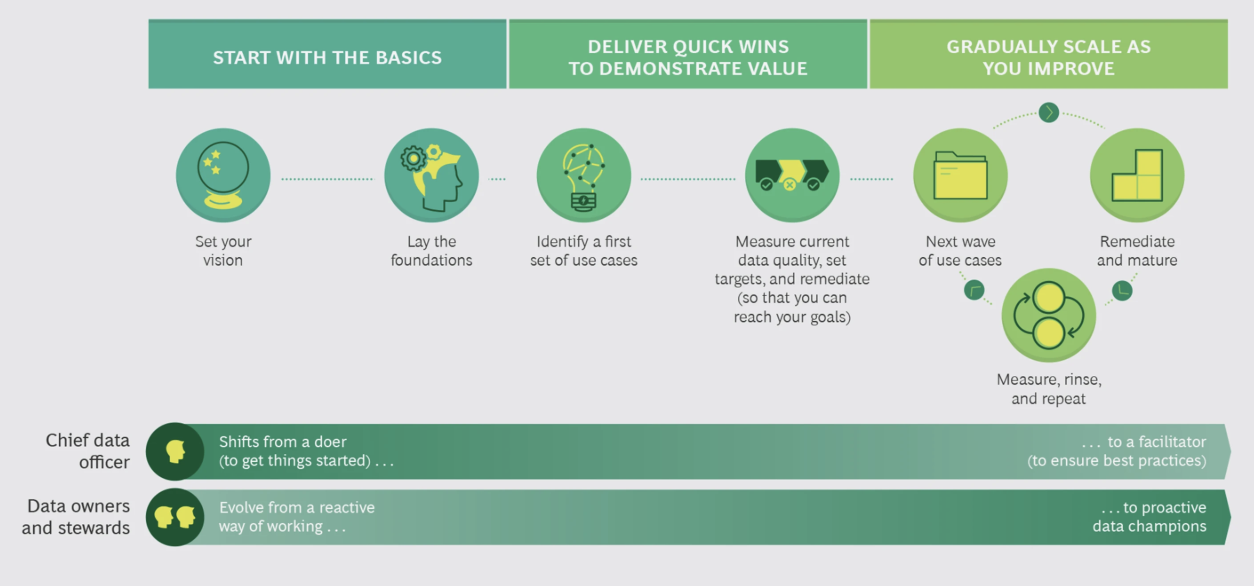
FIG 6: A use case approach builds data governance capabilities while delivering value (Source: BCG Analysis) [/caption]
CREATING A DATA-DRIVEN CULTURE
DAVID WALLER - 10 Steps to Creating a Data-Driven Culture | MARC ZAO SANDERS & JOSH BERSIN – Boost Your Team’s Data Literacy
In the HR Skills of the Future research we conducted last year, People Analytics emerged as the leading skill HR professionals most wanted to learn. This helped shape a good deal of the material we subsequently developed for the myHRfuture Academy. This pair of articles, provides a good taster. First, David Waller provides ten steps to organisations looking to develop a data-driven culture – if I may, I’d suggest an eleventh: Focus efforts on the most important business challenges. Then Josh Bersin teams up with Marc Zao-Sanders to offer ways managers can improve their team’s data literacy.
NANCY DUARTE – Four Storytelling Techniques to Bring Your Data to Life
Storytelling is often described as the ‘last mile problem’ in People Analytics. In this article, renowned communication expert Nancy Duarte explains how by leveraging four techniques from storytelling, leaders can bring a richer, more human understanding to the problem that the data reveals and better understand the opportunities it presents. These techniques are identifying the hero and the adversary, speaking with people generating the data, identifying and addressing conflict, and sharing context.
If it’s your role to communicate data insights and persuade people to change their behaviour, you’ll have more influence and promote better decision-making if you emphasise the people behind the numbers.
THE FUTURE OF PEOPLE ANALYTICS
BERNARD MARR - Future Of People Analytics: What Lies Ahead For Data-Driven HR?
Bernard Marr is usually a couple of years ahead of most people when it comes to understanding how technology and analytics will help shape the future, so this article looking at what lies ahead for people analytics caught my eye. Bernard’s assertions that HR has a unique role to play, must lead the way when it comes to automation and that the future for people analytics “intelligent, data-driven HR” all auger well - particularly if HR is able to direct its efforts to the business challenges that matter most in their organisation.
Demonstrating that you can use data in original ways to solve key problems is a sure-fire path to success in the information age
PODCAST OF THE MONTH
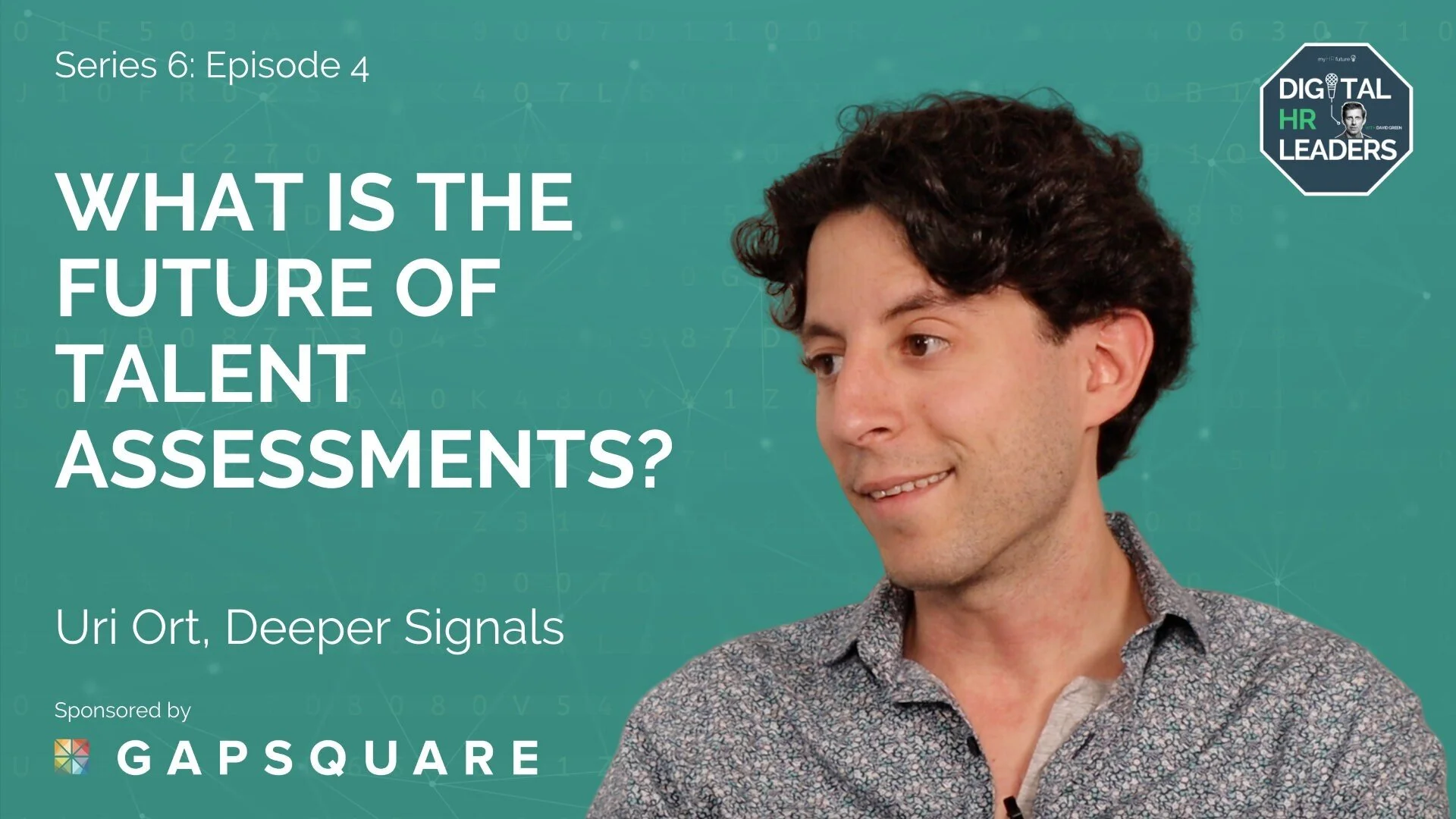
ROB CROSS & HALELLY AZULAY - How Network Analysis Can Improve Your Collaborative Process and Prevent Burnout | STEPHEN FROST & STUART CRAINER – Thinkers50 Podcast: Diversity | URI ORT & DAVID GREEN – What is the future of Talent Assessment?
I’ve selected three podcasts covering a diverse range of topics this month. Firstly, Rob Cross discusses how to leverage network analysis to create efficient networks, improve your collaborative process and avoid overloading your high performers. Then Stephen Frost and Stuart Crainer debate whether or not the diversity and inclusion case has been settled, and if so, what is missing on the execution front. Finally, Uri Ort and I discuss the new generation of assessment tools harnessing gamification, data science and AI and their impact on user experience, bias and business value.
VIDEO OF THE MONTH | RESEARCH STUDY OF THE MONTH
DOUGLAS A. READY, CAROL COHEN, DAVID KIRON, AND BENJAMIN PRING - The New Leadership Playbook for the Digital Age – Reimagining what It takes to lead Report | Webinar
The 2020 Future of Leadership Global Executive Study and Research Report from Cognizant and MIT Sloan Management Review finds that organisations must empower leaders to change their ways of working and adopt a new set of behaviours (see FIG 7) and mindsets to succeed in the new digital economy. Read the report then view the webinar where the team that created the study explain the research findings and the implications for leadership.
[caption id="" align="alignnone" width="1920"]
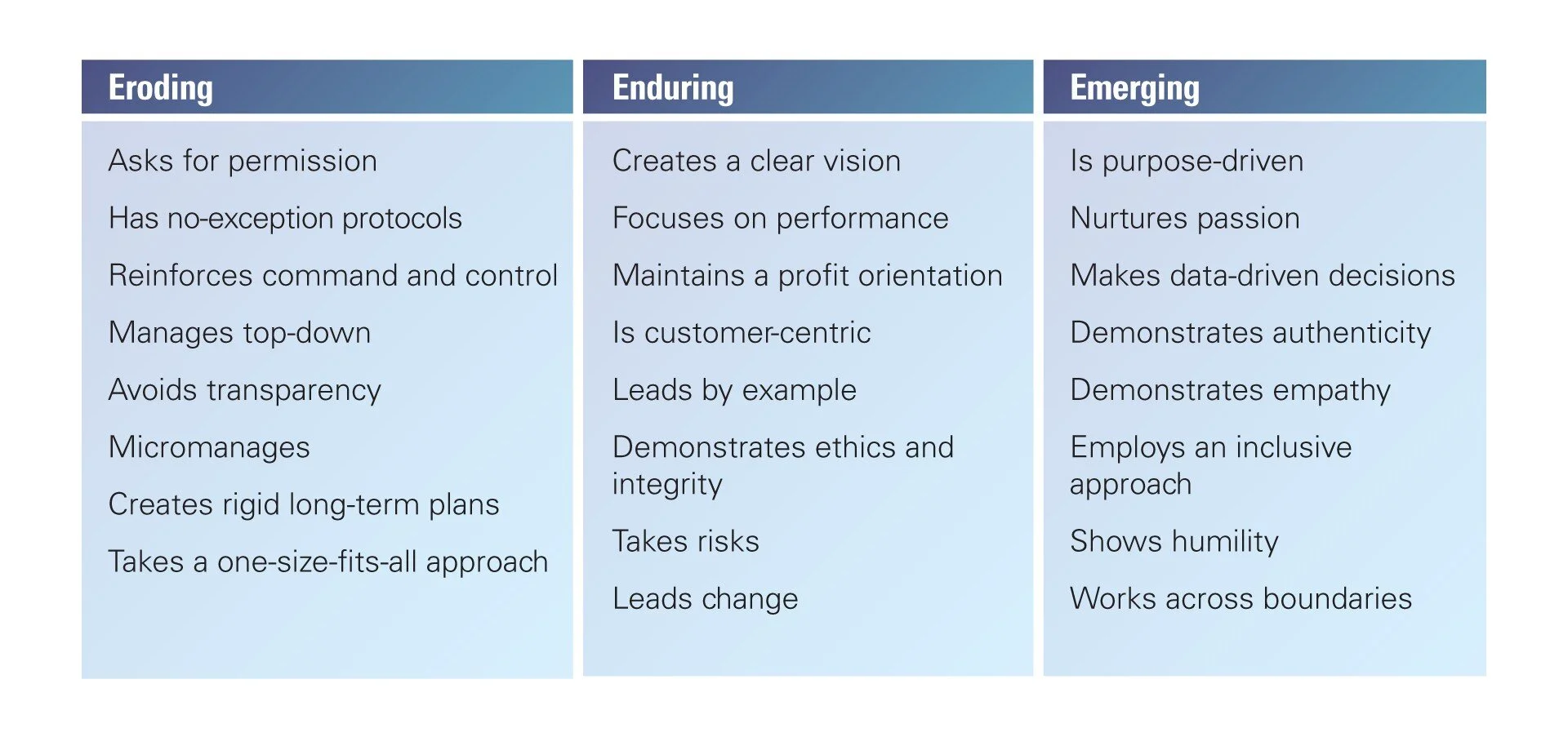
FIG 7: Eroding, Enduring and Emerging leadership behaviours (Source: Cognizant, MIT Sloan Management Review) [/caption]
FROM MY DESK
Five Steps to Getting Started with People Analytics
Our research at myHRfuture found that people analytics was the one skill that HR professionals wanted to learn above all others. But where do you start? This article is intended to help get you going: from learning about your business and ensuring you’re answering the right business questions with people analytics to engaging the right stakeholders from the beginning. The article presents resources and case studies that might help you as you embark on this journey to build your people analytics capability.
People Analytics in 2020: Growth, Leading Practices, Case Studies & Ethics
My reflections on LinkedIn’s recent Global Talent Trends 2020 report as well as research we’ve done at Insight222 to examine the state of People Analytics. Topics analysed include the accelerating growth of People Analytics, the successful practices of leading organisations, case studies from the likes of Microsoft, HSBC, Nestlé and Unilever and how ethics is the foundation of delivering value from workforce data.
CATCH UP ON THE DIGITAL HR LEADERS PODCAST
If you haven't listened to all of the episodes of the Digital HR Leaders Podcast, you can catch up now by clicking on the links below. Series 7 of the Podcast launches on 10th March where my guest will be Piyush Mathur, Global Head, Workforce Analytics, Data Strategy and Governance at Johnson & Johnson, and one of the foremost leaders in the people analytics field.
- EP 30: Katy Gray - How Arup uses read data to drive behavioural change
- EP 29: Uri Ort - What is the future of talent assessment?
- EP 28: Zara Nanu - The role of People Analytics in Gender Pay Analysis
- EP 27: Julia Shaw - How can technology reduce bias in the workplace
- EP 26: Stela Lupushor - How HR can be a Catalyst for Change
- BONUS EPISODE: Volker Jacobs - How to scale Employee Experience
- EP 25: Julie Digby - How HR Drives Transformation and Org Design at Mars
- EP 24: RJ Milnor - How McKesson uses ONA to identify what drives high performance in sales
- EP 23: Rupert Morrison - Rethinking Workforce Planning & Organisation Design
- EP 22: Dawn Klinghoffer - The Evolution of People Analytics at Microsoft
- EP 21: John Boudreau - Reinventing Jobs: The Future of Work and it's impact on HR
- EP 20: Tanuj Kapilashrami - How Standard Chartered designed an exceptional Employee Experience
- EP 19: Anna Tavis: What is Agile HR and how are companies adopting it?
- EP 18: Sarah Johnson: How to use employee surveys to create strategic value
- EP 17: Leena Nair - How HR drives business value at Unilever
- EP 16: Keith McNulty - HR 3.0: more data driven, more agile and more business focused
- EP 15: Jason Corsello - The Shift From HR Tech to Work Tech
- EP 14: Jill Larsen - How does the CHRO successfully partner with the CEO
- EP 13: Frida Polli - How AI and Behavioural Science can reduce bias in recruiting
- EP 12: Ian O'Keefe - The Workforce Analytics journey at JP Morgan Chase
- EP 11: Dave Ulrich - The role of HR in the Digital Age
- EP 10: Jordan Pettman - How Nestlé uses People Analytics to measure Gender Pay Gap and Equity
- EP 9: Catalina Schveninger - The Evolution of Corporate Learning at Vodafone
- EP 8: Richard Collins - How is Automation, AI and Analytics changing recruiting?
- EP 7: Katarina Berg - Spotify's CHRO on Leading HR in a digital world
- EP 6: Nick Holley - How HR can become more business relevant
- EP 5: Eden Britt - How to build a People Analytics team in a global organisation | The People Analytics journey at HSBC
- EP 4: Yvette Cameron - How Blockchain will disrupt the Future of Work and HR Technology
- EP 3: Didier Elzinga - How to Create a Culture First Company
- EP 2: Edward Houghton - The Head of Research at the CIPD on Driving Business Performance with People Data
- EP 1: Sharon Doherty - How to transform HR to be more digital and building a culture of diversity
ABOUT THE AUTHOR
David is a globally respected writer, speaker, conference chair, and executive consultant on people analytics, data-driven HR and the future of work. As an Executive Director at Insight222, he helps global organisations create more cultural and economic value through the wise and ethical use of people data and analytics. Prior to joining Insight222 and taking up a board advisor role at TrustSphere, David was the Global Director of People Analytics Solutions at IBM Watson Talent. As such, David has extensive experience in helping organisations embark upon and accelerate their people analytics journeys.
SEE ME SPEAK AT THESE EVENTS IN 2020
I’ll be chairing and/or speaking about people analytics, data-driven HR and the Nine Dimensions for Excellence in People Analytics model at the following events until the end of May 2020.
- 11-12 Mar - The People Analytics Program Peer Group Meeting, Amsterdam (hosted by ING - for Insight222 clients only)
- 16-17 Mar – HR Core Lab – Leading with Talent Analytics, Barcelona
- 24-25 Mar – UNLEASH Spring, London
- 27 Apr - Employee Experience Summit, Vienna
- 29-30 Apr – PAFOW London
- 19-20 May - The People Analytics Program Peer Group Meeting, Seattle (hosted by Microsoft - for Insight222 clients only)
Similar articles

Product-Oriented HR Playbook
Most AI investments in HR fail. Not because the technology doesn't work — but because users don't adopt. Product-orientation solves this.

Digital HR Services Experience – The Big Lip-Service
For decades, companies were trying to square the circle and deliver‘more for less’. They called it ‘HR Transformation’ or new, ‘P&O Transformation’. The…
Squaring the Circle
For decades, companies were trying to square the circle and deliver‘more for less’. They called it ‘HR Transformation’ or new, ‘P&O Transformation’. The…